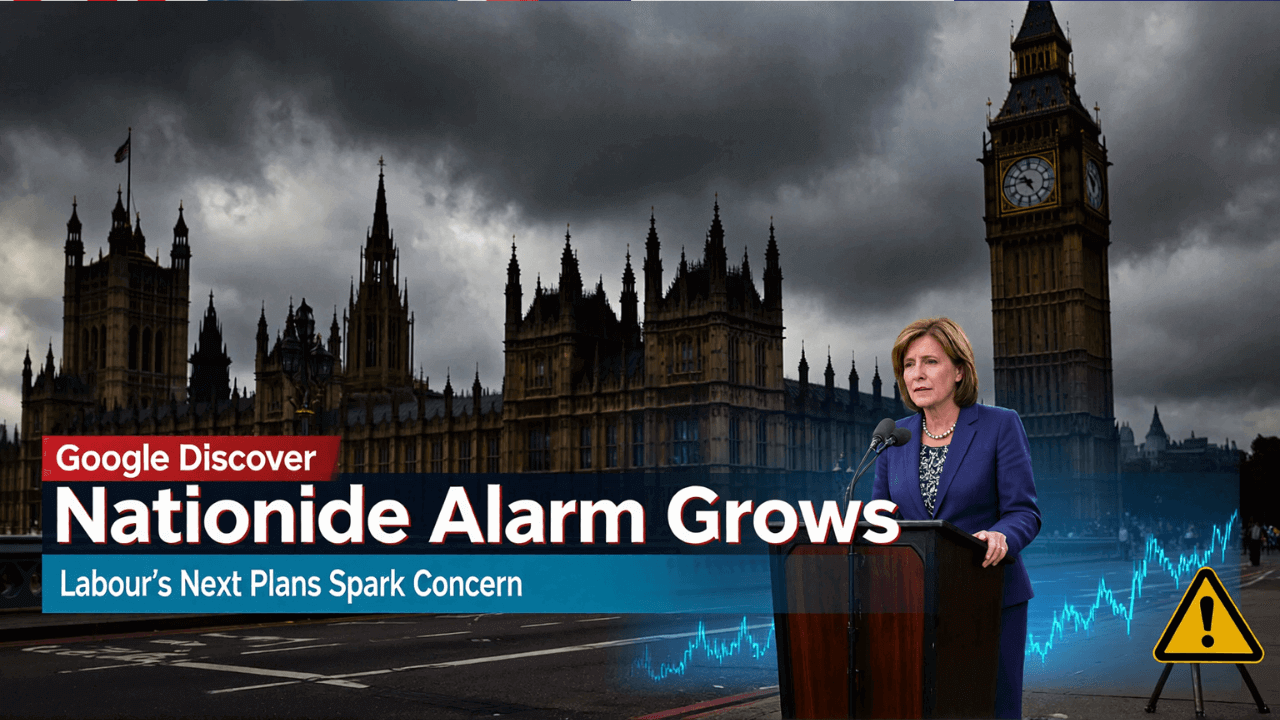
Britain’s political mood is shifting again, and at the centre of the growing tension is Rachel Reeves. Once viewed as Labour’s calm and credible economic voice, Reeves now finds herself under increasing pressure as fresh details of Labour’s next plans trigger anxiety across households, businesses, and financial markets.
From tax fears to spending warnings, the alarm is no longer limited to Westminster. Conversations in offices, pubs, and online forums reveal a shared concern: what exactly will a Labour government do next, and who will end up paying the price?
A fragile moment for Labour
Labour’s rise in the polls has brought with it a new level of scrutiny. When a party is behind, bold promises are welcomed. When power looks close, those same promises are pulled apart line by line.
Rachel Reeves has spent years positioning herself as a “safe pair of hands,” repeatedly emphasising fiscal discipline and economic responsibility. But recent signals from Labour’s front bench have raised doubts about how those assurances would hold up in practice.
The timing could not be worse. Households are still recovering from years of high inflation, rising mortgage costs, and stagnant wages. Any suggestion of financial disruption now lands heavily.
What sparked the nationwide alarm
The concern isn’t tied to one single announcement. Instead, it’s the combination of policy hints, internal briefings, and public comments that has unsettled voters.
Key worries include:
- Potential tax rises framed as “rebalancing”
- Looser language around borrowing and public spending
- Ambiguity on how new commitments would be funded
- Mixed messaging on business taxation and wealth reforms
Individually, these ideas might sound manageable. Together, they paint an uncertain picture that has left many asking whether Labour’s plans are fully costed — or quietly risky.
Tax fears return to the spotlight
Taxation sits at the heart of public anxiety. Reeves has been careful to rule out increases in headline taxes such as Income Tax, VAT, and National Insurance. However, critics argue that this leaves plenty of room for alternative routes.
Whispers around capital gains, property-related taxes, pensions, and higher-rate thresholds have not gone unnoticed. For middle-income earners, the fear isn’t dramatic tax hikes — it’s the slow squeeze of frozen allowances and stealth changes that quietly reduce take-home pay.
For pensioners and savers, uncertainty is even sharper. Many worry that long-term plans made under current rules could be undermined with little warning.
Business confidence begins to wobble
Small and medium-sized businesses are watching closely. After years of pandemic recovery, supply chain disruption, and rising costs, stability is the priority.
Yet business groups have voiced concern that Labour’s proposals could:
- Increase employer costs
- Add regulatory burdens
- Reduce incentives for investment
- Create uncertainty around long-term planning
Even the perception of instability can have consequences. Delayed hiring, paused expansion, and cautious spending decisions can ripple through the wider economy quickly.
Markets respond to uncertainty
Financial markets rarely wait for policies to become law. They react to signals — and those signals have become harder to read.
Currency analysts, bond traders, and investors are paying attention to every line Reeves delivers. While there has been no dramatic market reaction yet, analysts warn that confidence can shift suddenly if clarity is not restored.
For a party eager to present itself as economically credible, this grey area is dangerous territory.
Labour’s internal balancing act
Behind the scenes, Labour is facing a familiar internal tension. On one side are voices urging caution and continuity. On the other are members pushing for bold reform after years in opposition.
Rachel Reeves is caught in the middle.
She must reassure markets and voters while keeping the party’s base engaged. The challenge lies in doing both without appearing vague, evasive, or contradictory.
So far, critics argue that the messaging has leaned too heavily on reassurance without detail, leaving space for speculation and fear.
Public trust and memory
For many voters, trust is shaped by memory. Britain has lived through economic shocks before — sudden policy changes, rushed budgets, and promises that unravelled under pressure.
That history means even careful language is scrutinised. When Reeves speaks about “growth-driven investment” or “fair contribution,” voters want specifics, not slogans.
Without them, doubts fill the gap.
Cost of living remains the backdrop
Any economic debate in the UK today is framed by the cost-of-living crisis. Energy bills, food prices, rents, and mortgages remain high relative to wages.
People aren’t asking for ideological change — they want predictability.
That’s why even minor hints of disruption feel amplified. When budgets are tight, uncertainty feels personal.
Political opponents seize the moment
Unsurprisingly, Labour’s opponents have moved quickly to capitalise. Claims of “hidden taxes” and “unfunded spending sprees” dominate headlines and social media.
Whether fair or exaggerated, these attacks gain traction when clear counter-arguments are missing. Reeves’ careful tone, once seen as reassuring, now risks being portrayed as evasive.
Pressure mounts on Rachel Reeves
The spotlight is now firmly on Reeves herself. As the face of Labour’s economic strategy, she carries responsibility not only for policy but perception.
Supporters argue she is being unfairly targeted before any formal manifesto is released. Critics counter that leadership means clarity — especially when power is within reach.
Either way, the pressure is real, and growing.
What voters want next
Across the political spectrum, the public message is consistent: show your workings.
Voters want:
- Clear funding explanations
- Transparent tax commitments
- Realistic spending timelines
- Honest trade-offs
Reassurance alone is no longer enough. Detail is becoming a demand, not a luxury.
A defining moment ahead
Rachel Reeves still has time to reset the narrative. A well-defined economic framework, backed by credible numbers, could calm fears and strengthen Labour’s position.
But if uncertainty continues, the alarm may grow louder — not just among political commentators, but among everyday voters deciding where their trust lies.
For now, Britain watches closely. What Labour says next — and how clearly it is said — could shape not just an election, but the country’s economic confidence for years to come.