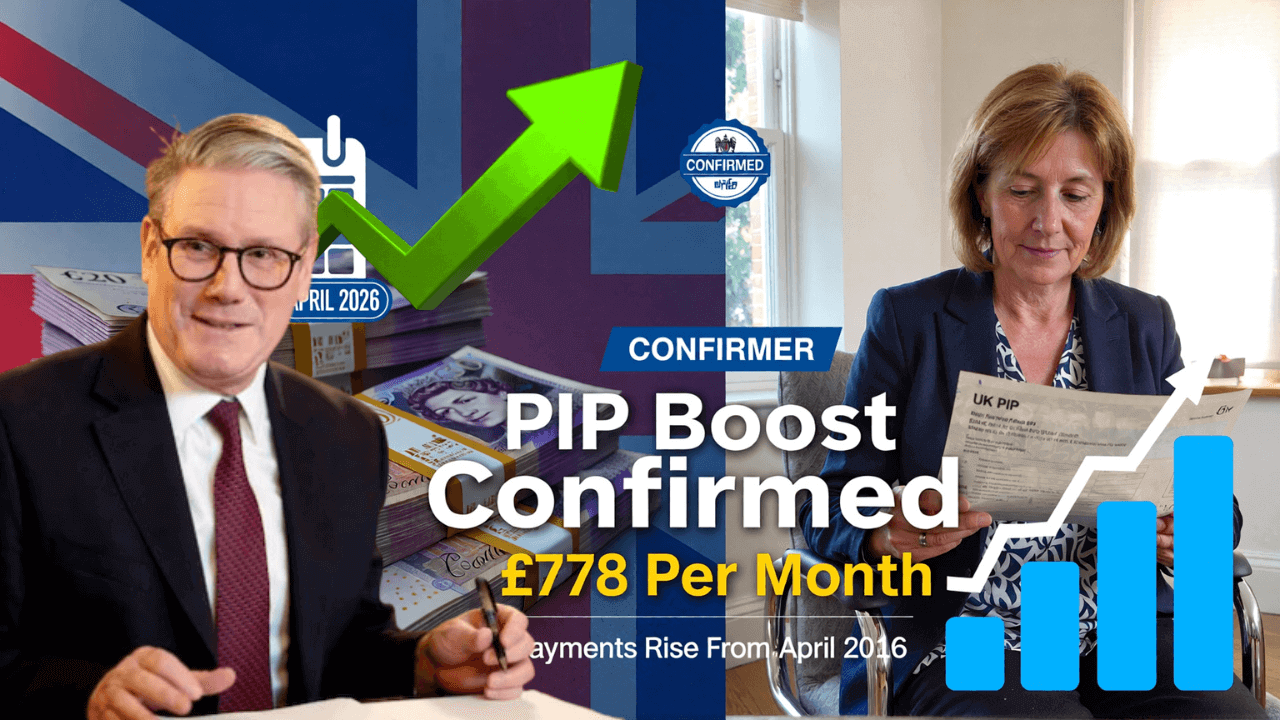
The Department for Work and Pensions has confirmed that Personal Independence Payment will rise from April 2026, with the highest rate reaching £778 per month. The announcement brings reassurance to millions of disabled people across the UK who rely on PIP to help cover the extra costs of daily living and mobility linked to long‑term health conditions.
As living costs remain high, particularly for households facing disability‑related expenses, the increase is being closely watched. While PIP is not intended to replace income, it plays a crucial role in supporting independence and quality of life for people whose health conditions affect their ability to carry out everyday activities.
This article explains what the April 2026 PIP boost means, how the £778 monthly figure is calculated, who will benefit, when the new rates start, and what claimants should know going forward.
Why PIP payments are increasing in April 2026
PIP payments are reviewed and uprated each year, usually in line with inflation measures. The government says this process is designed to ensure that disability benefits keep pace with rising prices and do not lose their real‑world value.
Despite inflation easing compared with previous years, disabled people continue to face higher‑than‑average living costs. The April 2026 increase reflects recognition that these pressures remain significant.
What PIP is and who it supports
PIP is a non‑means‑tested benefit designed to help people with long‑term physical or mental health conditions or disabilities. It is paid regardless of employment status, savings or income.
Eligibility is based on how a condition affects a person’s daily living and mobility, rather than on the medical diagnosis itself.
How PIP payments are structured
PIP consists of two separate components: the daily living component and the mobility component. Each component can be awarded at either a standard rate or an enhanced rate.
Claimants may receive one component or both, depending on how their condition affects them.
How the £778 per month figure is reached
The £778 per month figure represents the combined value of the enhanced daily living component and the enhanced mobility component after the April 2026 increase.
Only claimants awarded the highest rate for both components will receive the full £778 each month.
The daily living component explained
The daily living component helps with extra costs linked to everyday activities such as preparing food, eating, washing, dressing, managing medication and communicating.
People who need significant help or supervision with these activities may qualify for the enhanced rate.
The mobility component explained
The mobility component supports people who have difficulty moving around or planning and following journeys. This can include physical mobility problems as well as mental health conditions that affect travel.
As with daily living, greater levels of difficulty result in higher payments.
Who will benefit from the April 2026 PIP boost
All existing PIP claimants will see their payments increase from April 2026, provided they remain entitled to PIP. New claimants awarded PIP after that date will also receive the higher rates.
The increase applies automatically and does not require a new application or assessment.
When the new PIP rates will be paid
The new rates take effect from April 2026. Most claimants will see the increased amount in their first PIP payment after that date.
Because PIP is usually paid every four weeks, the exact timing may vary slightly between individuals.
How the increase will appear in payments
The higher amount will be included in regular PIP payments and will not appear as a separate or labelled “boost”.
Some claimants may notice the increase without receiving a separate notification beforehand.
Whether claimants need to do anything
Claimants do not need to contact the DWP or apply for the increase. Uprating is applied automatically to all eligible awards.
The only action required is ensuring bank details and personal information remain up to date.
How PIP differs from other benefits
Unlike Universal Credit or Employment and Support Allowance, PIP is not affected by earnings or savings. This makes it particularly important for disabled people who work or live with a partner who earns income.
The April 2026 increase does not change this principle.
PIP and Universal Credit together
PIP can be claimed alongside Universal Credit and does not reduce Universal Credit payments. In some cases, receiving PIP can actually increase Universal Credit entitlement through additional elements.
The PIP boost may therefore have wider financial benefits for some households.
Mental health conditions and PIP
Mental health conditions such as anxiety, depression and cognitive impairments can qualify for PIP if they significantly affect daily living or mobility.
The April 2026 increase applies equally to awards based on mental health conditions.
Long‑term and fluctuating conditions
PIP assessments consider how a condition affects someone on the majority of days. This recognises that some conditions fluctuate over time.
Higher rates are awarded where the impact is severe or ongoing.
Why not everyone will receive £778 per month
Many claimants receive the standard rate for one or both components, or only one component. The £778 figure represents the maximum possible monthly payment.
Actual PIP amounts vary widely depending on individual circumstances.
How PIP is paid
PIP is paid every four weeks directly into the claimant’s bank account. Payment schedules remain unchanged following the increase.
Award letters are usually updated around the time of uprating.
Is the increased PIP taxable
PIP is not taxable and does not count as income for tax purposes. The April 2026 increase does not change this.
It also does not reduce most other benefits.
Reviews and reassessments
Some claimants are periodically reassessed to check whether their circumstances have changed. Others receive longer‑term awards with fewer reviews.
The rate increase applies regardless of review schedules.
Concerns raised by disability groups
Disability organisations have welcomed the increase but continue to argue that disability‑related costs often rise faster than inflation. Many say further reform is needed to ensure adequate long‑term support.
The April 2026 boost is seen as helpful but not a complete solution.
Warnings about scams
Announcements about benefit increases often lead to scam attempts. The DWP will never ask for bank details or charge fees to process increases.
Claimants should ignore unsolicited messages claiming action is required.
How the PIP boost fits into wider benefit changes
The PIP increase forms part of the annual benefit uprating that usually takes effect each April. Other disability and working‑age benefits are also typically adjusted at the same time.
Full details are confirmed ahead of the new financial year.
What claimants should check now
Claimants may find it helpful to review their current award to understand which components and rates they receive. This makes it easier to estimate the size of the increase.
Keeping award letters safe can prevent confusion later.
What to do if a payment seems incorrect
If a payment after April 2026 does not reflect the expected increase, claimants should allow time for processing and then contact the DWP if needed.
Most issues are resolved quickly once checked.
Key points to remember
PIP payments will rise from April 2026, with the highest combined rate reaching £778 per month. The increase is automatic and applies to all eligible claimants.
No application is required.
Final thoughts
The confirmation of a PIP boost from April 2026, with top payments reaching £778 per month, offers reassurance to millions of disabled people across the UK. While the increase will not remove all financial pressures, it provides important additional support for those facing the greatest challenges.
For claimants, staying informed and understanding how PIP works remains essential. As April approaches, the higher payments will help many households better manage the extra costs of living with disability in an increasingly expensive environment.