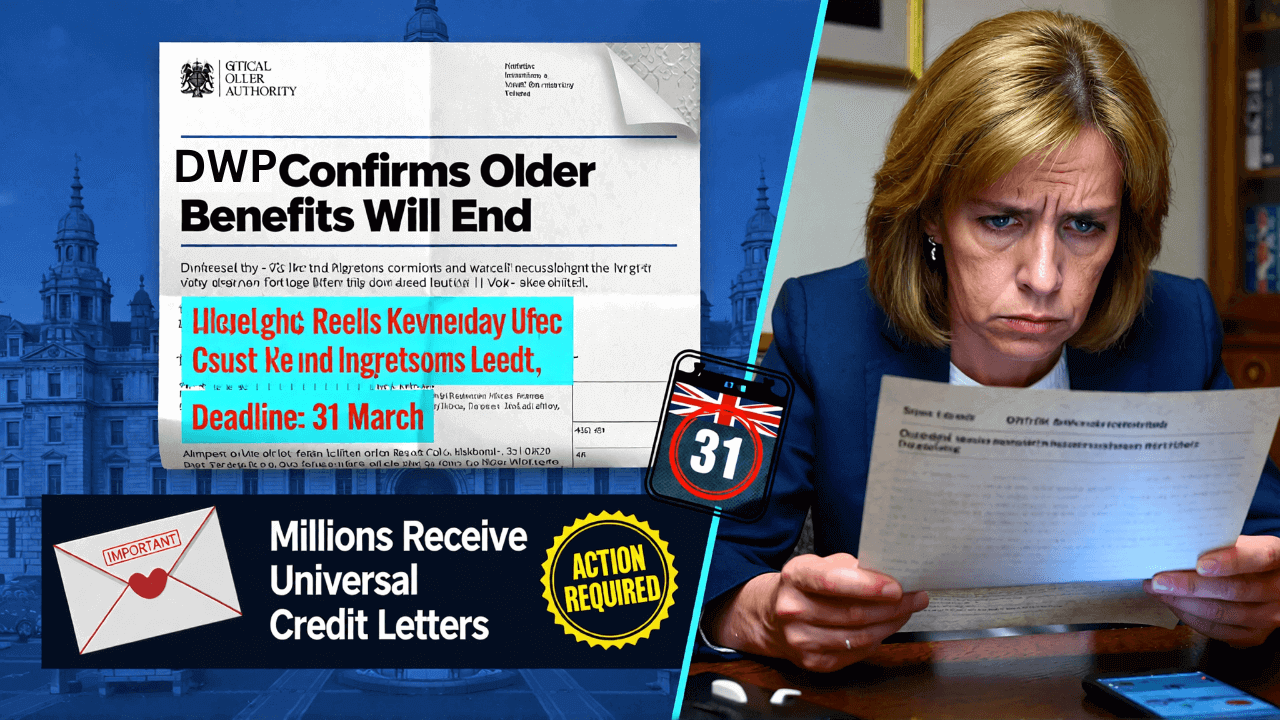
The Department for Work and Pensions has confirmed that several older, so‑called “legacy benefits” will officially come to an end by 31 March, as millions of claimants receive letters instructing them to move to Universal Credit. The announcement marks a major milestone in the government’s long‑running welfare reform programme and signals the final phase of the transition away from the previous benefits system.
Across the UK, households receiving legacy benefits are now being contacted directly by the DWP. These letters explain what claimants need to do, the deadlines involved and what will happen if no action is taken. For many people, particularly those who have claimed the same benefits for years, the letters have raised questions, concerns and anxiety about what the change means for their income.
This article explains which benefits are ending, why the move to Universal Credit is happening now, what the letters mean, what claimants must do before 31 March, and what support is available during the transition.
Why the DWP is ending older benefits
The government has been gradually replacing older benefits with Universal Credit for more than a decade. The aim is to simplify the welfare system by bringing multiple payments into a single monthly benefit.
According to the DWP, running two parallel systems is costly and confusing. Ending older benefits is seen as the final step in completing the transition.
Which benefits are classed as “older” or legacy benefits
Legacy benefits include Income Support, income‑based Jobseeker’s Allowance, income‑related Employment and Support Allowance, Housing Benefit for working‑age claimants, Working Tax Credit and Child Tax Credit.
These benefits are no longer open to new claims and are now being fully replaced by Universal Credit.
What the March 31 deadline means
The 31 March deadline marks the point by which affected claimants are expected to have moved onto Universal Credit. For most people, this does not mean their benefit suddenly stops without warning.
Instead, the deadline is linked to the managed migration process, under which the DWP formally notifies claimants and gives them time to make a Universal Credit claim.
Why millions are receiving Universal Credit letters
The letters being sent out are part of the managed migration programme. They are official notifications telling claimants that their current benefit will end and that they must claim Universal Credit to continue receiving financial support.
Receiving a letter does not mean payments stop immediately, but it does start a countdown.
What the letters usually say
Universal Credit migration letters typically explain which benefit is ending, the date by which a Universal Credit claim must be made, and where to get help. They also reassure claimants that support is available.
The letters often include warnings about what happens if no action is taken.
Why the letters can cause worry
For people who have relied on legacy benefits for years, any official letter about benefits can be unsettling. Many fear they will lose money or struggle with the new system.
Others worry about digital applications, monthly payments or changes to how housing costs are paid.
What happens if someone ignores the letter
If a claimant does not make a Universal Credit claim by the deadline stated in their letter, their existing benefit can stop. This can leave households without income until a new claim is made.
The DWP strongly encourages people not to ignore the letters and to seek help if unsure.
How Universal Credit replaces older benefits
Universal Credit combines several benefits into one monthly payment. This includes support for living costs, housing, children and limited capability for work.
The idea is to provide a clearer picture of total support, although the structure is very different from the older system.
Why some people worry about losing money
Some claimants fear that Universal Credit will leave them worse off. The DWP says transitional protection is available for people who move as part of managed migration and would otherwise receive less.
This protection is designed to prevent immediate financial losses.
What transitional protection means
Transitional protection tops up a claimant’s Universal Credit so that they do not receive less than they did under legacy benefits at the point of migration. However, this protection can reduce over time as circumstances change.
It is only available to people who move following a DWP migration notice.
Why timing matters when claiming Universal Credit
Claiming Universal Credit at the right time is important. People who claim too early or outside the managed migration process may lose entitlement to transitional protection.
This is why following the instructions in the letter is essential.
What support is available to help people claim
The DWP says support is available for people who struggle with online applications or need extra help. This includes telephone support, face‑to‑face help and assistance through local organisations.
Citizens Advice and other charities also offer guidance.
How housing benefit is affected
For working‑age claimants, Housing Benefit is being replaced by the housing element of Universal Credit. This means rent support is paid as part of the monthly Universal Credit payment.
Some tenants worry about managing rent payments themselves rather than having them paid directly to landlords.
What pensioners should know
People who have reached State Pension age are not generally required to move to Universal Credit. Pension Credit remains in place for older claimants.
However, mixed‑age couples may be affected depending on their circumstances.
The impact on disabled and long‑term sick claimants
Many disabled people and those with long‑term health conditions currently claim income‑related ESA. These claimants are also being moved to Universal Credit.
The DWP says protections are in place, but campaigners continue to monitor the impact closely.
Why the change has taken so long
The transition to Universal Credit has faced delays due to complexity, legal challenges and concerns about vulnerable claimants. The government has slowed and adjusted the rollout multiple times.
The current phase represents the final push to complete the system change.
What happens after someone applies
Once a Universal Credit claim is submitted, there is usually an assessment period before the first payment. Advances are available for people who need money sooner.
The DWP says it works to ensure continuity of support where possible.
Why budgeting can feel different under Universal Credit
Universal Credit is paid monthly, which can feel challenging for people used to weekly or fortnightly payments. This change requires adjustments to budgeting and bill management.
Support is available for people who need help adapting.
How claimants can prepare for the change
Claimants are encouraged to read their letters carefully, gather necessary documents and seek advice early. Preparation can reduce stress and prevent delays.
Taking action sooner rather than later is advised.
Why misinformation can be dangerous
Rumours about benefits ending overnight or everyone losing money can spread quickly online. This misinformation can cause unnecessary panic.
Relying on official letters and trusted advice sources is crucial.
What campaigners are watching
Welfare groups are closely monitoring how the final migration phase affects vulnerable households. Concerns remain about digital access, debt and mental health.
The DWP says it will respond to issues as they arise.
What the DWP says about fairness
The department insists Universal Credit provides a fairer and more modern system. Officials argue it better reflects how people move in and out of work.
Critics, however, say some groups still face challenges.
What happens after March 31
After 31 March, legacy benefits will no longer continue for those required to migrate. Universal Credit will be the main support for working‑age claimants.
This marks the end of an era in the UK benefits system.
Why this change is significant
Ending older benefits represents one of the biggest welfare changes in decades. It affects millions of households and reshapes how support is delivered.
The impact will be felt across communities.
What claimants should do now
Anyone who receives a Universal Credit migration letter should read it carefully, note the deadline and seek help if needed. Ignoring the letter could risk losing income.
Support is available, but action is essential.
Key points to remember
The DWP has confirmed that older benefits will end by 31 March, with millions of claimants receiving letters about moving to Universal Credit. The letters start the migration process and explain what steps must be taken.
Following the instructions is critical to protecting entitlement.
Final thoughts
The confirmation that older benefits will end by 31 March brings long‑running welfare reform to a decisive moment. For many claimants, the arrival of a Universal Credit letter signals change, uncertainty and the need to act.
While the transition may feel daunting, support and protections are in place for those who move as instructed. Staying informed, seeking advice and responding promptly can help ensure that the move to Universal Credit is as smooth as possible during this final phase of the system overhaul.