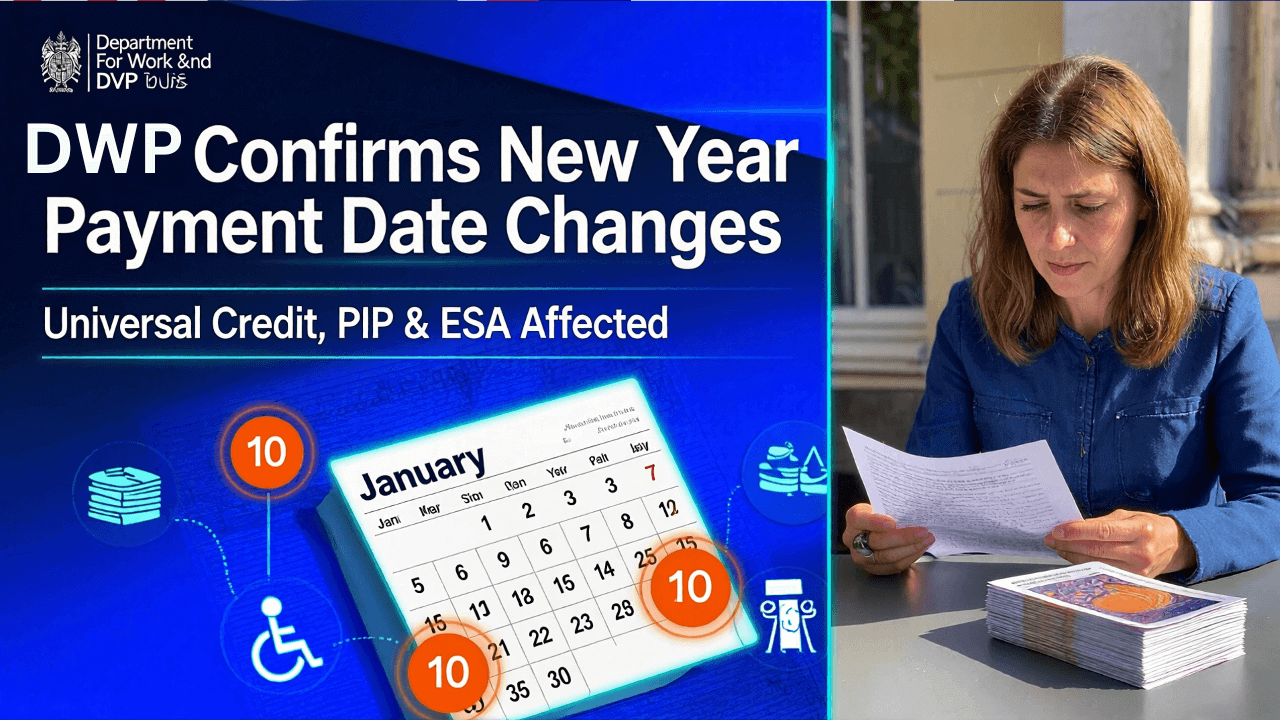
As the New Year approaches, millions of people across the UK are being urged to check their benefit payment dates. The Department for Work and Pensions (DWP) has now officially confirmed changes to payment schedules for Universal Credit, Personal Independence Payment (PIP), and Employment and Support Allowance (ESA) due to the New Year bank holiday.
Every year, bank holidays affect when benefits are paid. January is especially important because many households are already under pressure after Christmas, with higher bills, rent, and energy costs landing at the same time. Even a short delay can cause real problems if people are not prepared.
This article explains exactly what the DWP has confirmed, which benefits are affected, when payments will arrive, and what claimants should do to avoid financial disruption.
Why New Year Payment Dates Are Changing
The main reason for the changes is the New Year bank holiday. In the UK, banks do not process payments on official bank holidays. When a scheduled benefit payment falls on one of these days, the DWP issues the money earlier so claimants are not left waiting.
For New Year 2026, the bank holiday falls on Thursday 1 January. Any DWP payment that would normally be due on this date will be paid before the holiday.
This is not a cut or reduction in benefits. It is simply a timing change, but it can still cause confusion if people are expecting money on a specific day.
Benefits Affected by the New Year Changes
The DWP has confirmed that several major benefits will be affected by the New Year payment schedule. These include Universal Credit, PIP, and ESA, along with other linked benefits.
If you receive one of the following, your payment date may change:
- Universal Credit
- Personal Independence Payment (PIP)
- Employment and Support Allowance (ESA)
- Jobseeker’s Allowance (JSA)
- Income Support
- Carer’s Allowance
Not everyone will be affected. Only those whose usual payment date falls on or around 1 January will see a change.
Universal Credit Payment Date Changes Explained
Universal Credit is paid monthly, usually on the same date each month. If your normal payment date falls on 1 January, the DWP has confirmed that your money will be paid early.
Most affected claimants can expect to receive their Universal Credit on Tuesday 31 December, although in some cases it may arrive even earlier depending on bank processing times.
It is important to remember that this is still one monthly payment, not an extra one. Because the money arrives early, there may be a slightly longer gap before your next payment in February. Budgeting carefully is essential.
What Universal Credit Claimants Should Do
Universal Credit claimants are strongly advised to:
- Check their online Universal Credit journal
- Look out for official messages confirming payment dates
- Plan spending carefully to cover the longer gap to the next payment
- Avoid assuming an extra payment has been made
If you rely on Universal Credit to cover rent, utilities, or food, setting aside money for later in the month can help prevent difficulties.
PIP Payment Date Changes in January
Personal Independence Payment is usually paid every four weeks. If your PIP payment is due on 1 January, the DWP has confirmed it will be paid before the bank holiday.
Most PIP claimants affected by the change should receive their payment on 31 December. In some cases, payments may arrive on 30 December, depending on how your bank processes transactions.
Because PIP supports people with long-term health conditions or disabilities, the DWP has stressed that no one will lose money due to the timing change.
Important Advice for PIP Claimants
If you receive PIP, you should:
- Check your recent bank statements
- Monitor your account in the days before New Year
- Contact your bank first if a payment appears late
- Only contact the DWP if the money has not arrived by the expected early date
The DWP advises waiting at least one working day after the early payment date before raising concerns.
ESA Payment Date Changes Confirmed
Employment and Support Allowance payments will also be affected by the New Year bank holiday. Claimants whose ESA is due on 1 January will receive their payment early, usually on 31 December.
This applies to both contribution-based and income-related ESA, including those who still receive ESA alongside Universal Credit.
As with other benefits, the amount remains the same. Only the date changes.
Other Benefits Impacted by the New Year Bank Holiday
While the main focus is on Universal Credit, PIP, and ESA, other benefits will also be paid early if they fall on New Year’s Day. These include:
- Carer’s Allowance
- Jobseeker’s Allowance
- Income Support
If you receive more than one benefit, it is possible that all payments may arrive on the same day. This can be helpful, but it also means careful budgeting is essential.
Will Payments Be Late After New Year
One common concern is whether payments will be delayed after the New Year period. The DWP has confirmed that normal payment schedules will resume after the bank holiday.
However, because payments are made early, some claimants may feel the gap between payments is longer. This is not a delay but a result of receiving money ahead of schedule.
If your payment is due on 2 January or later, it should be paid as normal.
How to Check Your Exact Payment Date
The easiest way to confirm your payment date is through official channels.
Universal Credit claimants should check their online journal, where payment dates are usually confirmed in advance.
PIP and ESA claimants can check:
- Recent DWP letters
- Bank statements
- Official DWP text messages
Avoid relying on rumours or social media posts, as incorrect information spreads quickly around bank holidays.
What to Do If Your Payment Does Not Arrive
If your payment has not arrived by the expected early date, the DWP advises the following steps:
- Check with your bank first, as some payments are processed later in the day
- Confirm the date was affected by the bank holiday
- Contact the DWP only after allowing one full working day
Most payment issues around bank holidays are resolved quickly once banks complete processing.
Budgeting Tips for the New Year Period
January is already a difficult month financially, and early benefit payments can make it harder to manage.
Some practical tips include:
- Splitting your payment into weekly amounts
- Prioritising rent, council tax, and energy bills
- Avoiding large purchases at the start of the month
- Using budgeting apps or simple notes to track spending
Planning ahead can reduce stress and help ensure money lasts until the next payment.
DWP Reminder for Claimants
The DWP has reminded claimants that bank holiday payment changes happen every year and are designed to prevent delays, not cause them.
Claimants are encouraged to stay informed, check official communications, and avoid panic if money arrives earlier than expected.
If you receive benefits, it is always a good idea to check payment dates ahead of major holidays such as Christmas, Easter, and New Year.
Final Thoughts on the New Year Payment Changes
The DWP’s confirmation of New Year payment date changes for Universal Credit, PIP, and ESA is important information for millions of UK households.
Payments due on 1 January will be paid early, usually on 31 December, ensuring claimants are not left without support during the bank holiday. While the amount remains the same, careful budgeting is essential to manage the longer gap until the next payment.
Staying informed and planning ahead can make a significant difference during the challenging winter months.