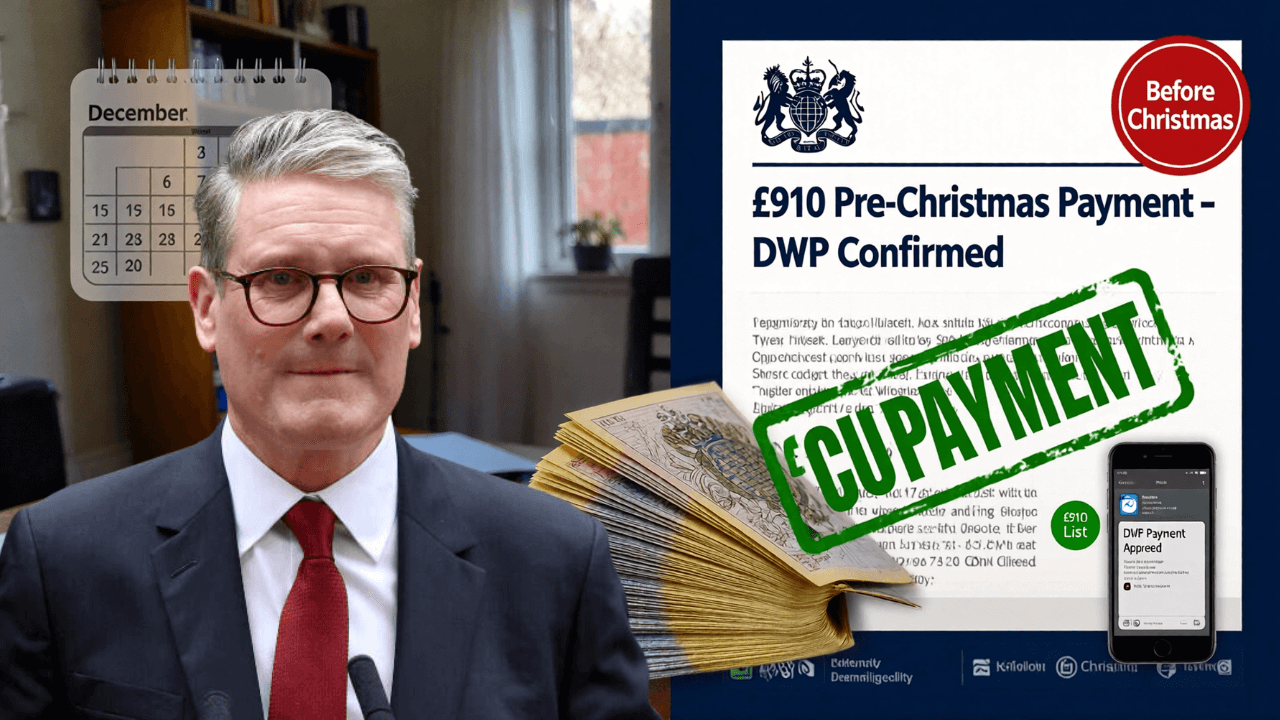
As households across the UK prepare for Christmas, confirmation of additional financial support has brought much-needed relief to millions. The Department for Work and Pensions (DWP) has now confirmed that some claimants will receive up to £910 in total payments before Christmas, depending on their benefit situation.
With energy bills still high, food prices remaining above pre-inflation levels, and winter pressures increasing, this pre-Christmas payment package is designed to help vulnerable households cope with seasonal costs. However, not everyone will qualify, and eligibility depends on specific benefits and dates.
This guide explains who qualifies, how the £910 figure is reached, when payments arrive, and what to do if your money does not come through.
What the £910 Pre-Christmas Payment Actually Means
The £910 figure is not a single one-off payment landing in everyone’s bank account. Instead, it refers to the combined value of multiple confirmed payments being issued before Christmas to eligible households.
For many people, this amount is made up of:
- Cost of Living Payments
- Winter Fuel Payment (including pensioner top-ups)
- Disability Cost of Living support
- Cold Weather Payments (where triggered)
When added together, some households — particularly pensioners or disabled claimants — may see total support reaching up to £910 before Christmas.
Why the DWP Is Issuing Pre-Christmas Support
The government has acknowledged that winter remains the most financially difficult period for low-income households. Heating costs rise, food bills increase over Christmas, and many people face extra travel or care expenses.
The DWP’s winter support package aims to:
- Protect pensioners during cold months
- Support disabled people facing higher living costs
- Help benefit claimants manage seasonal expenses
- Reduce pressure on emergency financial services
While these payments are not new schemes, their timing before Christmas is critical and intentional.
Who Could Be Eligible for the £910 Support
Eligibility depends on which benefits you receive and whether you meet qualifying dates. You do not need to apply separately for most payments — they are issued automatically if you qualify.
You may be eligible if you receive one or more of the following:
- Universal Credit
- Pension Credit
- Income-based Jobseeker’s Allowance
- Income-related Employment and Support Allowance
- Income Support
- Personal Independence Payment (PIP)
- Disability Living Allowance (DLA)
- Attendance Allowance
- State Pension (for Winter Fuel Payment)
Many people will qualify for more than one payment, which is how the total can approach £910.
Breakdown of Payments Included Before Christmas
Understanding how the £910 total is reached helps avoid confusion and misinformation.
Cost of Living Payment Amounts
The Cost of Living Payment has been issued in stages. Eligible low-income households can receive up to £300 in winter instalments, depending on government confirmation periods.
These payments are automatic and paid directly into the same bank account used for your benefit.
Winter Fuel Payment and Pensioner Top-Ups
Pensioners born before the qualifying date may receive:
- Standard Winter Fuel Payment (£200–£300)
- Additional pensioner cost of living top-up (up to £300)
This alone can bring pensioner winter support close to £600.
Disability Cost of Living Support
Those receiving PIP, DLA, Attendance Allowance or certain disability benefits may receive an additional £150–£300 payment.
This support recognises the extra heating, transport and care costs disabled people often face during winter.
Cold Weather Payments
In areas where temperatures fall below zero for seven consecutive days, £25 Cold Weather Payments may be triggered automatically.
While not guaranteed everywhere, multiple triggers can increase total winter support.
When Will the Payments Be Made
Most eligible households will receive payments between late November and mid-December, well ahead of Christmas.
Exact dates vary depending on benefit type, but the majority of payments:
- Arrive on weekdays
- Are labelled clearly in bank statements
- Use existing benefit payment channels
Winter Fuel Payments usually arrive first, followed by Cost of Living and disability payments.
How You Will See the Payment in Your Bank Account
Payments may appear under different references, including:
- “DWP COL”
- “Winter Fuel Payment”
- “DWP Cost of Living”
- “DWP PIP”
Seeing multiple smaller payments rather than one large £910 deposit is normal.
Do You Need to Apply for the £910 Payment
No application is required for most people.
If you already receive qualifying benefits and meet the eligibility dates:
- Payments are automatic
- No forms are needed
- No phone calls are required
Be cautious of scams asking you to “confirm details” — the DWP does not contact people this way.
What If You Do Not Receive the Payment
If you believe you qualify but do not receive a payment:
- Check your benefit entitlement during the qualifying period
- Review your bank statement carefully
- Allow time for staggered payments
If money is still missing after official payment windows close, you can contact the DWP directly for clarification.
Will This Affect Other Benefits or Tax
No. These payments:
- Are tax-free
- Do not count as income
- Do not affect benefit caps
- Do not reduce future payments
They are separate support payments designed purely to help with living costs.
Common Reasons People Miss Out
Some people miss payments because:
- They were not receiving benefits during the qualifying window
- Their claim started after eligibility dates
- They receive contribution-based benefits only
- Their benefit was temporarily suspended
Understanding these rules helps avoid unnecessary worry.
What This Means for UK Households This Christmas
For families and individuals under financial pressure, this support offers genuine breathing space. While it does not solve long-term cost challenges, it can help cover:
- Heating bills
- Christmas food costs
- Essential travel
- Winter clothing
- Care expenses
For pensioners and disabled people especially, receiving support before Christmas reduces stress during an already difficult season.
Will There Be More Support After Christmas
The government has not ruled out further assistance in the new year, but no additional payments have been officially confirmed yet.
Future support will likely depend on:
- Inflation levels
- Energy prices
- Public spending reviews
- Economic forecasts
Claimants are advised to stay informed through official updates rather than social media rumours.
Final Check Before Christmas
If you receive qualifying benefits, now is a good time to:
- Ensure your bank details are up to date
- Check benefit award letters
- Monitor payment dates
- Budget ahead for January expenses
The £910 figure represents maximum combined support, not a guaranteed amount for everyone — but millions will benefit from some level of pre-Christmas help.