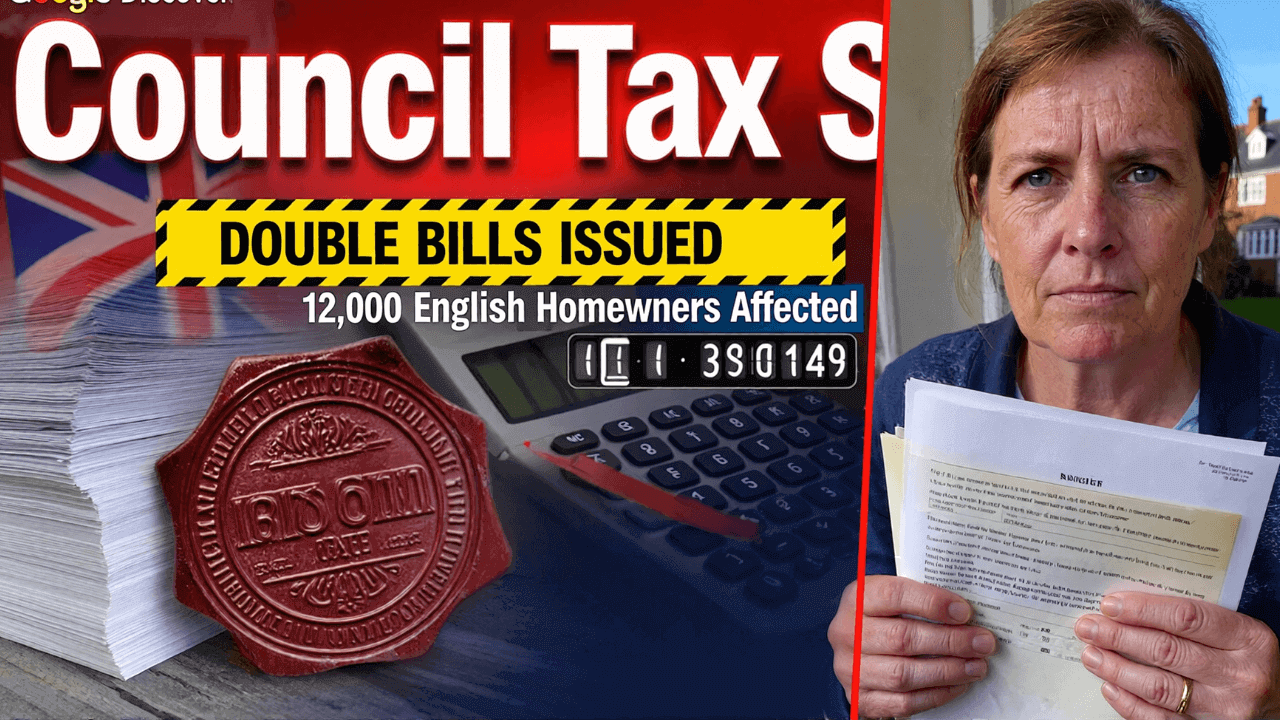
Thousands of homeowners across England are facing an unexpected and deeply worrying financial blow after receiving council tax demands that are double what they paid previously. For around 12,000 households, the increase has arrived without much warning, landing at a time when many families are already struggling with rising living costs.
The sudden jump has triggered confusion, anger, and anxiety, particularly among pensioners and low-income homeowners who believed their council tax bills were stable. While councils insist the charges are lawful, many residents say they had no idea such a steep rise was even possible.
This article explains why double council tax bills are happening, who is most at risk, and what homeowners can do right now if they think they have been wrongly charged.
Why Some Homeowners Are Seeing Double Council Tax Bills
The sharp increases are not random, and they are not due to a nationwide rise in council tax rates alone. In most cases, the double bills are being issued because councils have reclassified certain properties under existing rules.
Local authorities are allowed to charge up to 200% council tax on some homes, particularly those that meet specific criteria such as being left empty for long periods. Many homeowners only discover this rule exists when the bill arrives.
Councils argue that these charges are meant to encourage better use of housing stock during a national housing shortage. For affected homeowners, however, the policy feels more like a penalty than an incentive.
Empty Homes Are the Main Trigger
The most common reason for a double council tax bill is that a property has been officially classed as long-term empty.
In England, councils can apply higher charges when a home has been unoccupied and unfurnished for more than one year. The longer a property remains empty, the higher the charge can climb.
In some cases, homeowners are being billed at double the standard rate because their council believes the property has crossed the threshold, even if the owner disputes that claim.
Second Homes Also Under Pressure
Second homes are increasingly being targeted by councils, especially in areas facing housing shortages.
Some local authorities have introduced premium charges on properties that are not a main residence. While this power has existed for years, more councils are now actively using it as budgets tighten.
Homeowners who use a property occasionally, or who assumed their second home was exempt, are among those receiving unexpectedly high bills.
Administrative Reviews Are Catching People Out
Another issue is council-led reviews of property records. Councils regularly audit their databases to identify homes that may have been misclassified in the past.
If a council decides a property should have been charged a premium earlier, homeowners may face a sudden jump in costs once the classification is updated.
Although councils say they notify residents, many homeowners claim letters were missed, unclear, or never received.
Who Is Most Affected by the Double Bills
The impact of these council tax shocks is not evenly spread. Certain groups are far more likely to be affected than others.
Pensioners who have inherited property, landlords between tenants, and families dealing with probate after a death are among those most commonly caught by the rules.
Homeowners renovating properties also appear frequently on council lists, particularly if the work takes longer than expected.
Pensioners Facing Unexpected Financial Stress
Many older homeowners rely on fixed incomes and carefully planned budgets. A sudden doubling of council tax can quickly become unmanageable.
Some pensioners believed their properties qualified for exemptions, only to learn those exemptions had expired or never applied in the first place.
For households already choosing between heating and food, the extra cost is causing real distress.
Families Caught During Probate or Renovations
Properties left empty during probate or major repairs often fall into grey areas.
While some councils offer temporary relief, this is not automatic and varies widely between areas. Once relief ends, full charges can apply immediately.
Homeowners who assumed they had more time are finding themselves hit with bills they cannot afford.
Why Councils Are Pushing These Charges Now
Local councils across England are under intense financial pressure. Rising service costs, reduced central funding, and growing demand for social care have left many authorities searching for additional revenue.
Charging premiums on empty and second homes is one of the few tools councils can use without raising standard council tax for everyone.
From a policy perspective, councils argue the approach is fair. From a homeowner’s point of view, it often feels sudden and harsh.
Is the Double Council Tax Charge Legal
Yes, these charges are legal under existing legislation. Councils are allowed to apply higher rates when properties meet certain criteria.
However, legality does not mean every bill is correct. Errors do happen, and some properties are wrongly classified due to outdated or incomplete information.
That is why checking your bill carefully is essential.
What Homeowners Should Check Immediately
If you have received a council tax bill that appears unusually high, do not ignore it. Acting quickly can make a significant difference.
Start by checking how your property has been classified. Look for terms such as “long-term empty” or “premium charge” on the bill or accompanying letter.
If the description does not match your situation, you may have grounds to challenge it.
Evidence Can Make or Break a Challenge
Councils rely heavily on records, but those records are not always accurate.
If your property has been occupied, even part-time, you may be able to prove it through utility bills, tenancy agreements, or other documentation.
Photographs, council correspondence, and renovation invoices can also help support your case.
Discounts and Exemptions Still Exist
Despite the headlines, not all hope is lost for affected homeowners.
Some councils offer discretionary discounts, particularly for people facing financial hardship. Others allow exemptions during probate or major structural repairs.
These are not always advertised clearly, so you may need to ask directly.
Payment Plans Can Ease the Pressure
If the charge is valid but unaffordable, contact your council as soon as possible.
Most councils are willing to discuss payment plans rather than risk non-payment. Spreading the cost over a longer period can reduce immediate strain.
Ignoring the bill, however, can lead to enforcement action and added costs.
Why This Issue Is Likely to Grow
The number of households facing double council tax bills is expected to rise.
As councils continue reviewing property records and tightening enforcement, more homeowners may find themselves affected, particularly in high-demand housing areas.
With further budget pressures expected next year, the use of premium charges is unlikely to slow down.
What Homeowners Can Do Going Forward
Staying informed is the best defence.
If you own more than one property, or if a home is empty for any reason, check your council’s policy regularly. Rules can change with little notice.
Keeping records up to date and responding promptly to council letters can help avoid unpleasant surprises.
Final Thoughts on the Council Tax Shock
For the 12,000 homeowners already affected, the shock of a double council tax bill has been a harsh reminder of how quickly circumstances can change.
While councils defend the policy as necessary, the lack of clear communication has left many residents feeling blindsided.
If you receive a higher-than-expected bill, act quickly, ask questions, and seek clarification. In many cases, there are options available — but only if you know where to look.
As living costs continue to rise, council tax is becoming another pressure point for households across England, and this issue is unlikely to disappear anytime soon.