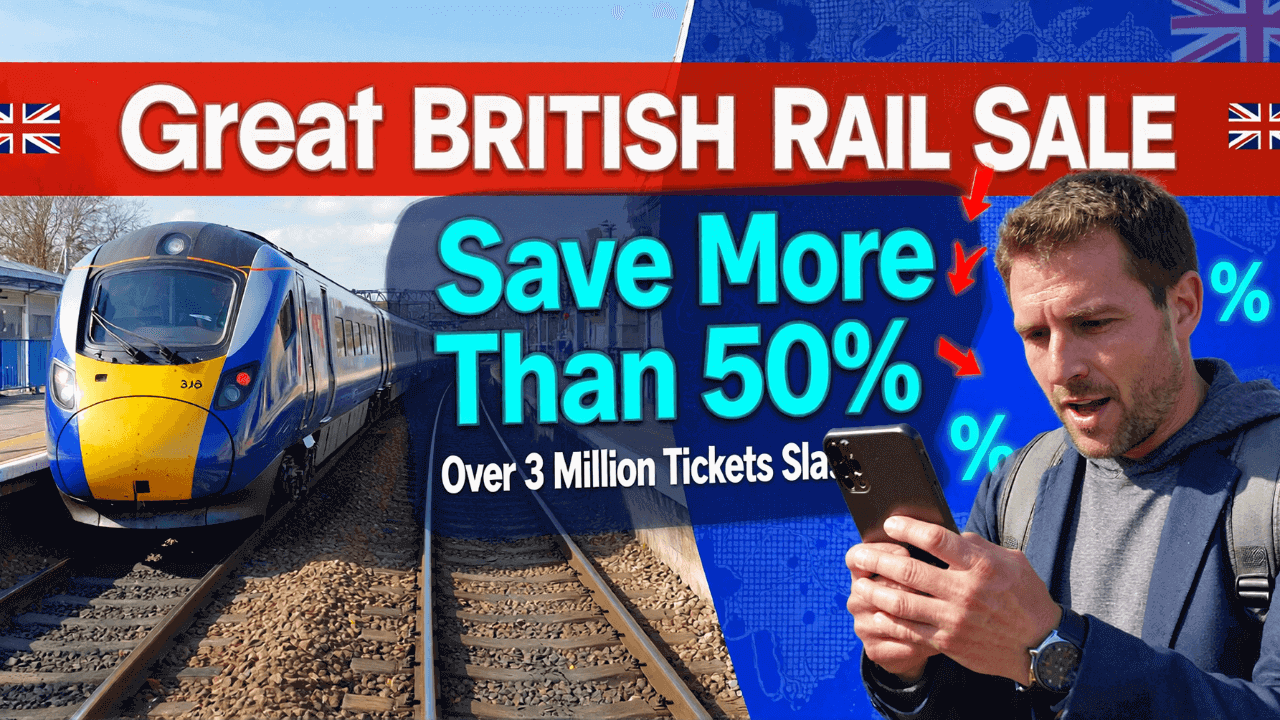
Millions of rail passengers across the UK have been given a rare opportunity to travel for less after more than three million train tickets were reduced in price as part of the Great British Rail Sale. With discounts of 50% or more on selected routes, the sale has quickly caught the attention of commuters, families, and leisure travellers alike.
The promotion is being supported by the rail industry through Rail Delivery Group, with the aim of encouraging more people to travel by train while easing the cost burden many passengers continue to face.
With rail fares often criticised for being expensive, this sale offers genuine savings — but only for those who understand how it works, which tickets qualify, and how long the discounts last.
This guide explains what the Great British Rail Sale includes, who can benefit most, and how UK travellers can secure the biggest savings.
What the Great British Rail Sale is
The Great British Rail Sale is a nationwide ticket discount event offering reduced fares on selected rail journeys across England, Scotland, and Wales.
More than three million tickets have been made available at discounted prices, with some journeys costing over half the usual fare. The sale focuses mainly on advance tickets for travel on specific dates, making it ideal for people who can plan ahead.
Unlike flash sales that disappear within hours, this promotion runs for a limited window but allows bookings well in advance.
Why train ticket prices are being slashed
Rail operators are using the sale to encourage people back onto trains following changes in travel habits and cost pressures.
Key reasons behind the discounts include:
- Boosting off‑peak and leisure travel
- Filling quieter services
- Encouraging rail over car travel
- Supporting tourism and regional economies
With flexible working reducing daily commuting, rail companies are focusing more on discretionary journeys such as weekends and short breaks.
How much passengers can save
Savings vary depending on route, time, and demand, but many travellers can expect:
- 50% off standard advance fares
- Savings of £10 to £40 on longer journeys
- Significant reductions on family travel
On some popular routes, return journeys that would normally cost £60 or more are available for under £30.
Which tickets are included
The sale mainly covers advance single tickets, which are cheaper fares tied to a specific train service.
These tickets:
- Are limited in number
- Must be booked in advance
- Are valid only on the selected service
While not flexible, they offer the biggest savings for travellers who know their plans.
Routes included in the sale
Discounted tickets are available on thousands of routes across the UK, including:
- Major city‑to‑city connections
- Regional services
- Popular leisure and tourist routes
Both long‑distance and shorter journeys are included, meaning the sale is not limited to headline routes alone.
When the discounted travel takes place
The sale allows travel over a wide range of future dates, often stretching several weeks or months ahead.
This makes it ideal for:
- Planning days out
- Booking weekend trips
- Organising visits to friends or family
However, peak‑time weekday commuter services are less likely to be included.
Who benefits most from the sale
The biggest beneficiaries are travellers who:
- Can travel off‑peak
- Plan journeys in advance
- Are flexible with times and dates
Families, couples, students, and retirees often see the greatest savings.
Why commuters may see fewer deals
Regular peak‑time commuters are less likely to benefit because:
- Peak services already operate at capacity
- Advance tickets are limited during rush hours
- Discounts focus on discretionary travel
That said, flexible workers travelling outside traditional peak times may still find reduced fares.
How to find the cheapest tickets
To secure the best deals, travellers should:
- Book as early as possible
- Compare times on the same day
- Check multiple nearby stations
Prices can vary significantly even within the same route.
Do Railcards still apply
Yes. Railcards can often be used on top of sale prices, creating even bigger savings.
Eligible Railcards include:
- 16‑25 Railcard
- Senior Railcard
- Two Together Railcard
- Family & Friends Railcard
In some cases, combining a Railcard with a sale ticket can reduce fares by more than 60%.
Family travel savings
Families travelling together can benefit substantially.
Children already travel at reduced rates, and when combined with sale prices:
- Family days out become far cheaper
- Longer journeys are more affordable
- Rail becomes competitive with car travel
This makes the sale particularly appealing during school holidays.
Why flexibility matters
The cheapest tickets sell out first.
Travellers willing to:
- Travel slightly earlier or later
- Choose alternative routes
- Adjust departure times
are far more likely to secure the biggest discounts.
What happens if plans change
Advance tickets are usually non‑refundable.
However:
- Some allow fee‑based changes
- Others can be exchanged before departure
It’s important to check the ticket conditions before booking.
Why this sale stands out
Rail sales are not new, but this one stands out because of:
- The scale of discounted tickets
- The depth of the price cuts
- The wide range of routes included
For many travellers, this is the cheapest opportunity to travel by train in months.
Impact on tourism and local economies
Cheaper train travel encourages people to:
- Visit new cities
- Take weekend breaks
- Explore regional destinations
This boosts spending in hotels, restaurants, and attractions, particularly outside London.
Environmental benefits of rail travel
Promoting rail travel also supports environmental goals.
Compared with cars:
- Trains produce fewer emissions per passenger
- Congestion is reduced
- City air quality improves
Lower fares make sustainable travel more attractive.
Why demand is high
Train ticket sales typically surge during discount events.
Many people delay booking in the hope of:
- Finding cheaper fares
- Avoiding high standard prices
As awareness spreads, availability reduces quickly.
Mistakes travellers should avoid
Common mistakes include:
- Waiting too long to book
- Assuming all routes are discounted
- Forgetting to apply Railcards
Checking details carefully avoids disappointment.
Are all operators taking part
Most major operators are involved, but availability varies.
Some routes may have:
- Limited discounted seats
- Specific travel date restrictions
Not every service will be reduced.
How long the sale lasts
The booking window is limited.
Once it closes:
- Prices return to normal levels
- Remaining cheap tickets disappear
Booking early is the safest approach.
What the sale does not include
It’s important to note:
- Season tickets are not included
- Open flexible tickets are rarely discounted
- Peak‑hour commuter fares remain largely unchanged
The sale targets advance leisure travel rather than daily commuting.
Why passengers should act quickly
With over three million tickets available, the sale is generous — but not unlimited.
As seats sell:
- Prices rise
- Options narrow
- Best deals vanish
Early action gives the widest choice.
Who should check even if unsure
Even travellers without fixed plans should:
- Check routes of interest
- Compare prices
- Consider future trips
Many are surprised by how low fares can be.
Key points to remember
- Over 3 million tickets are discounted
- Savings of more than 50% are possible
- Advance booking is essential
- Railcards can increase discounts
- Availability is limited
Final thoughts
The Great British Rail Sale offers one of the most significant opportunities in recent times for UK travellers to cut the cost of train travel. With millions of tickets reduced and savings of more than 50% available on selected routes, it provides real value for anyone able to plan ahead.
At a time when travel costs remain a concern for many households, this sale makes rail journeys more accessible, more affordable, and more appealing. Whether planning a short day trip or a longer getaway, those who act quickly and stay flexible stand to make the biggest savings.
For millions of passengers, this could be the moment when train travel finally feels like a bargain again.