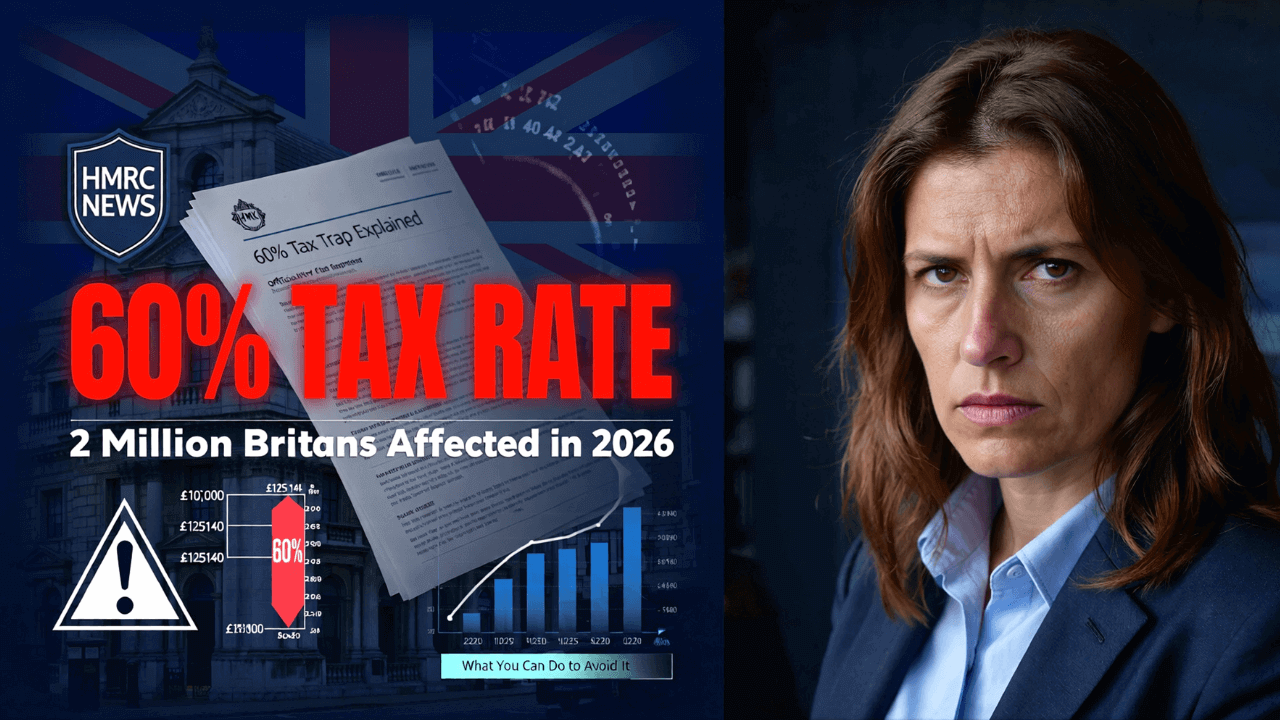
Around two million people in the UK are expected to be affected by what is commonly known as the “60% tax trap” in 2026, a little‑understood feature of the tax system that can dramatically reduce take‑home pay. Despite the headline figure, this is not a separate tax band but the result of how income tax and personal allowances interact at certain income levels.
The issue continues to attract attention because many affected individuals do not realise they are paying an effective tax rate far higher than the headline income tax rates. As wages rise and tax thresholds remain frozen, more people are being drawn into this high‑tax zone without any deliberate action on their part.
This article explains what the 60% tax trap is, why it affects so many people in 2026, who is most at risk, and what legal steps individuals can consider to reduce or avoid its impact.
What the 60% tax trap actually is
The so‑called 60% tax trap occurs when an individual earns between £100,000 and £125,140. Within this range, the personal allowance is gradually withdrawn, meaning for every £2 earned above £100,000, £1 of the tax‑free allowance is lost.
This creates a situation where income tax is paid not only on the extra earnings but also on income that was previously tax‑free.
Why the effective tax rate becomes so high
Within the affected income band, each additional £1 earned is taxed at 40% income tax, and at the same time causes a loss of tax‑free allowance. The combined effect results in an effective tax rate of around 60%.
This can come as a shock to people who believe they are simply moving through the higher‑rate tax band.
Why two million people are affected in 2026
The number of people affected has grown steadily due to frozen tax thresholds. As salaries rise through inflation, bonuses or promotions, more earners cross the £100,000 threshold.
By 2026, this freeze means people who never considered themselves high earners may now fall into the tax trap.
Who is most likely to be caught out
Professionals such as doctors, senior teachers, managers and technical specialists are among those most commonly affected. Many reach the threshold due to overtime, bonuses or pension growth rather than deliberate salary increases.
Dual‑income households may also be affected when one partner’s income increases slightly.
Why the tax trap often goes unnoticed
PAYE deductions can hide the true marginal tax rate. Many people only realise the issue when reviewing their annual tax summary or completing a self‑assessment return.
By that stage, it may be too late to take action for that tax year.
How frozen thresholds make the problem worse
The personal allowance taper has not moved in line with earnings growth. As a result, its impact now reaches deeper into the workforce.
Without changes to thresholds, the number of people affected is expected to continue rising.
Why bonuses can trigger unexpected tax bills
A one‑off bonus can push income over £100,000 even if base pay is below the threshold. This can lead to a much larger tax bill than expected.
Many people only discover this after the bonus has already been paid.
The role of pension contributions
One of the most common ways to reduce exposure to the 60% tax trap is through pension contributions. Contributions reduce adjusted net income, which is the figure used to calculate the personal allowance taper.
For some people, this can bring income back below £100,000 entirely.
How salary sacrifice can help
Salary sacrifice arrangements allow employees to give up part of their salary in exchange for pension contributions or other benefits. This reduces taxable income at source.
This approach can be particularly effective for those close to the £100,000 threshold.
What adjusted net income means
Adjusted net income is not simply gross salary. It takes into account pension contributions, charitable donations and certain reliefs.
Understanding this figure is crucial when planning to avoid the tax trap.
The impact of childcare costs
Losing the personal allowance can also affect eligibility for tax‑free childcare and free childcare hours. For families, this can significantly increase overall costs.
This makes the effective impact of crossing £100,000 even greater.
Why parents feel the impact more sharply
Families with young children can face a double hit: higher income tax and loss of childcare support. The combined effect can make small pay rises financially pointless.
This has led some parents to reduce hours or decline promotions.
The importance of planning before year‑end
Tax planning must usually be done before the end of the tax year. Once income is received, options become more limited.
Early awareness gives people more flexibility.
How charitable giving can reduce exposure
Gift Aid donations also reduce adjusted net income. For those already planning charitable giving, this can provide tax efficiency alongside social benefit.
However, donations should not be made solely for tax reasons.
Why self‑employed people face different challenges
Self‑employed individuals have more control over income timing but may still face the same taper. Irregular income can make planning harder.
Careful forecasting is particularly important.
What happens if nothing is done
If no action is taken, income within the taper range will continue to be taxed at the higher effective rate. Over time, this can amount to thousands of pounds in extra tax.
Many people accept this simply because they are unaware of alternatives.
Why this is a policy controversy
Critics argue that the 60% tax trap is poorly understood and unfairly punitive. Supporters say it targets higher earners without raising headline tax rates.
The debate continues, but the rules remain in place.
What has not changed for 2026
There has been no announcement removing the personal allowance taper or adjusting the £100,000 threshold for 2026. The mechanism remains exactly as before.
This means planning remains essential.
How to check if you are affected
Reviewing your adjusted net income and tax code is the first step. Online tax accounts provide useful summaries.
Professional advice may help in complex cases.
Why headlines can be misleading
The term “60% tax” can sound like a new tax rate, but it is actually the interaction of existing rules. Understanding this distinction reduces confusion.
Clarity helps people make informed decisions.
When professional advice is worth considering
Those with fluctuating income, complex pensions or multiple income sources may benefit from tailored advice. The cost can be outweighed by long‑term savings.
Advice should always be from regulated professionals.
What future earners should watch for
Younger professionals moving into higher‑paid roles should be aware of the threshold early. Planning from the start avoids last‑minute stress.
Awareness is the most effective tool.
Key points to remember
The 60% tax trap affects income between £100,000 and £125,140 due to the withdrawal of the personal allowance. Around two million people are expected to be affected in 2026 due to frozen thresholds.
The trap is legal, longstanding and avoidable in some cases with planning.
Final thoughts
The 60% tax trap is one of the least understood parts of the UK tax system, yet it affects a growing number of ordinary professionals rather than only the very wealthy. In 2026, frozen thresholds mean more people will encounter it, often without warning.
Understanding how it works and knowing what options exist can make a significant difference. While not everyone can avoid it entirely, informed planning allows individuals to make conscious choices rather than being caught out by surprise.