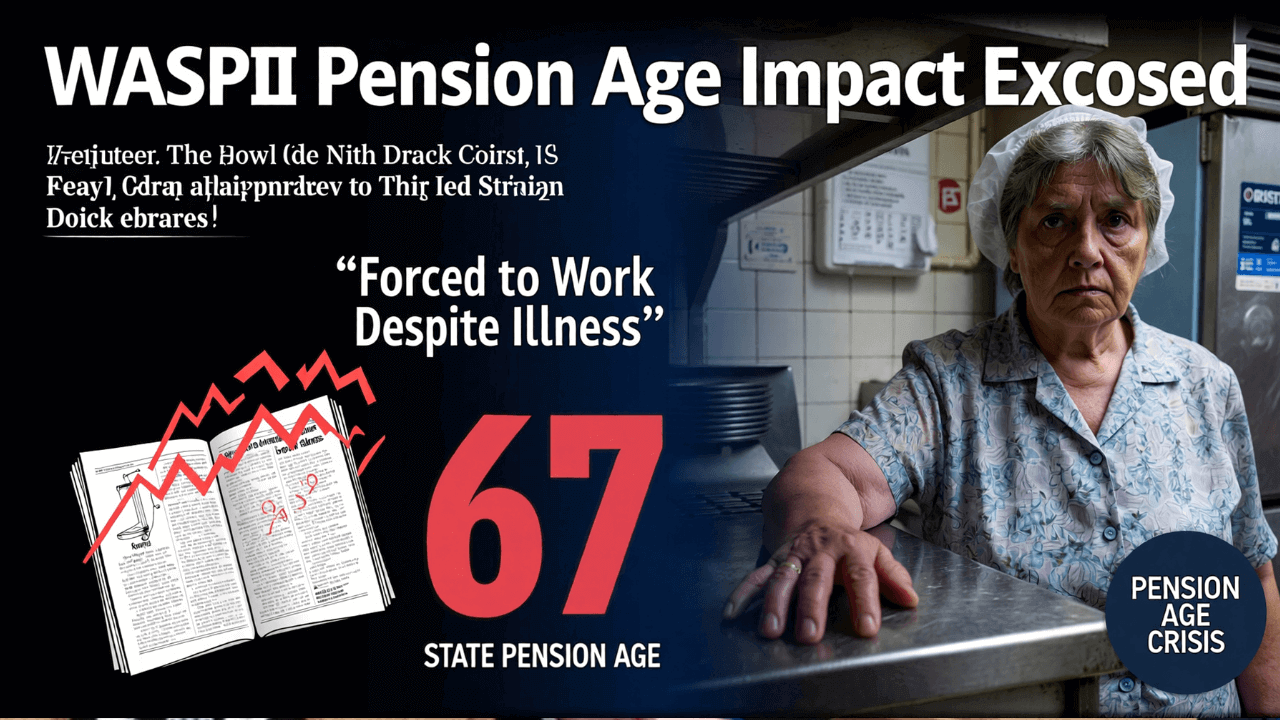
The ongoing impact of State Pension age changes on women born in the 1950s has once again come under scrutiny, as individual stories continue to highlight the human cost behind policy decisions. Campaigners say these cases reveal the real‑world consequences faced by women affected by the changes, many of whom feel they were given little time to prepare.
Among the most striking examples are women who, despite long working lives, now find themselves continuing in physically demanding jobs while dealing with serious health conditions. These stories have become central to the Women Against State Pension Inequality movement, commonly known as WASPI.
This article explores what the WASPI issue is, how State Pension age changes have affected some women, why individual cases such as that of a school dinner lady resonate so strongly, and what the current situation means for those still waiting for resolution.
What the WASPI campaign is about
The WASPI campaign represents women born in the 1950s who were affected by changes to the State Pension age. Many say they were not given adequate notice of the increases, which meant they could not properly plan for retirement.
The campaign does not oppose equalisation in principle but argues that the way changes were communicated caused financial and emotional hardship.
How State Pension age changes were introduced
Historically, women could claim the State Pension earlier than men. Over time, legislation was introduced to equalise and then raise the State Pension age for both sexes.
While the policy goal was equality and sustainability, critics argue that the pace and communication of the changes left many women unprepared.
Why notice and communication matter
Retirement planning often takes place many years in advance. For those expecting to retire at a certain age, sudden changes can disrupt savings plans, employment choices and health decisions.
WASPI supporters argue that insufficient notice removed the chance to adjust.
The reality for women in manual and caring roles
Many women affected by the pension age changes spent their working lives in lower‑paid or physically demanding jobs. Roles such as catering, cleaning and care work often take a greater toll on health over time.
Continuing in these roles later in life can be particularly challenging for those with long‑term conditions.
Why individual stories attract attention
Personal stories cut through complex policy debates. When a woman describes having to continue working despite illness, it highlights the gap between policy intentions and lived experience.
These cases resonate because they reflect fears shared by many others in similar situations.
The case of a dinner lady still working
Stories involving school dinner ladies have drawn attention because they represent a familiar and physically active role. Standing for long hours, lifting equipment and coping with busy environments can be difficult even for healthy workers.
For someone managing illness, the strain can be considerable.
Illness and the pressure to keep working
Women affected by pension age changes may not qualify for full support if they are deemed capable of some work. This can place them in a position where they must continue employment despite declining health.
The stress of financial insecurity can also worsen health conditions.
Why early retirement is not always an option
Some people assume affected women can simply retire early. In reality, early retirement often means reduced income or reliance on limited savings.
For many, this is not financially viable.
The role of savings and private pensions
Lower lifetime earnings and career breaks for caring responsibilities mean some women have limited private pension savings. This makes the State Pension particularly important.
When access is delayed, financial pressure increases.
How benefits interact with pension age changes
Some women turn to working‑age benefits while waiting for their State Pension. However, eligibility rules, assessments and conditionality can create additional stress.
These systems were not designed with older workers in mind.
Why WASPI supporters argue hardship is ongoing
Campaigners say that hardship did not end once pension ages were equalised. Women affected by the transition are still dealing with its consequences today.
They argue that justice delayed remains justice denied.
Government responses so far
Successive governments have acknowledged concerns about communication but have stopped short of offering compensation. The position has often been that changes were lawful and applied equally.
This stance has frustrated campaigners.
The role of the Ombudsman findings
Findings from the Parliamentary and Health Service Ombudsman have kept the issue in public debate. These findings relate to maladministration in communication rather than the policy itself.
They have added weight to calls for redress.
Why health is central to the debate
Health becomes more unpredictable with age. Policies that assume continued work into later life do not always account for this reality.
For those already unwell, the impact can be severe.
Emotional and mental strain on affected women
Beyond finances, uncertainty about the future can cause anxiety and distress. Feeling overlooked or dismissed by policymakers adds to the emotional burden.
Many women report feeling let down after decades of work.
How public opinion has shifted
Public awareness of the WASPI issue has grown through media coverage and personal stories. Sympathy has increased as more people understand the scale of the impact.
However, opinion remains divided on how the issue should be resolved.
What campaigners are calling for now
WASPI supporters continue to call for fair and timely compensation. They argue that recognition of harm is essential, regardless of policy intentions.
The focus is on transitional justice rather than reversing pension age equality.
Why timing matters for affected women
As more women reach State Pension age, opportunities for meaningful redress diminish. Campaigners stress that action delayed risks becoming symbolic rather than practical.
Time is a critical factor.
How this issue fits into wider pension debates
The WASPI case sits within broader discussions about retirement age, longevity and fairness. As people live longer, policymakers face difficult choices.
Balancing sustainability with compassion remains a challenge.
Lessons for future policy changes
One key lesson is the importance of clear, timely communication. Even well‑intended reforms can cause harm if people are not given adequate notice.
Future changes may be judged by how well this lesson is applied.
What affected women can do now
Women affected by pension age changes are encouraged to stay informed through official updates and trusted campaign groups. Seeking financial advice and checking benefit entitlement can also help manage the transition.
Support networks remain important.
Why these stories continue to matter
Individual cases keep the issue visible and remind policymakers that statistics represent real lives. They ensure the debate remains grounded in human experience.
Without these voices, the impact risks being overlooked.
Key points to remember
The WASPI issue centres on how State Pension age changes were communicated to women born in the 1950s. Stories of women continuing to work despite illness highlight the ongoing impact of delayed pension access.
The debate is about fairness, notice and the human cost of policy decisions.
Final thoughts
The story of a dinner lady forced to continue working despite illness brings the WASPI issue into sharp focus. It illustrates how pension age changes can affect not just finances, but health, dignity and quality of life.
As the debate continues, these personal experiences remain crucial in shaping public understanding. Whether or not compensation is ultimately offered, the stories serve as a reminder that policy decisions must always consider the people who live with their consequences.