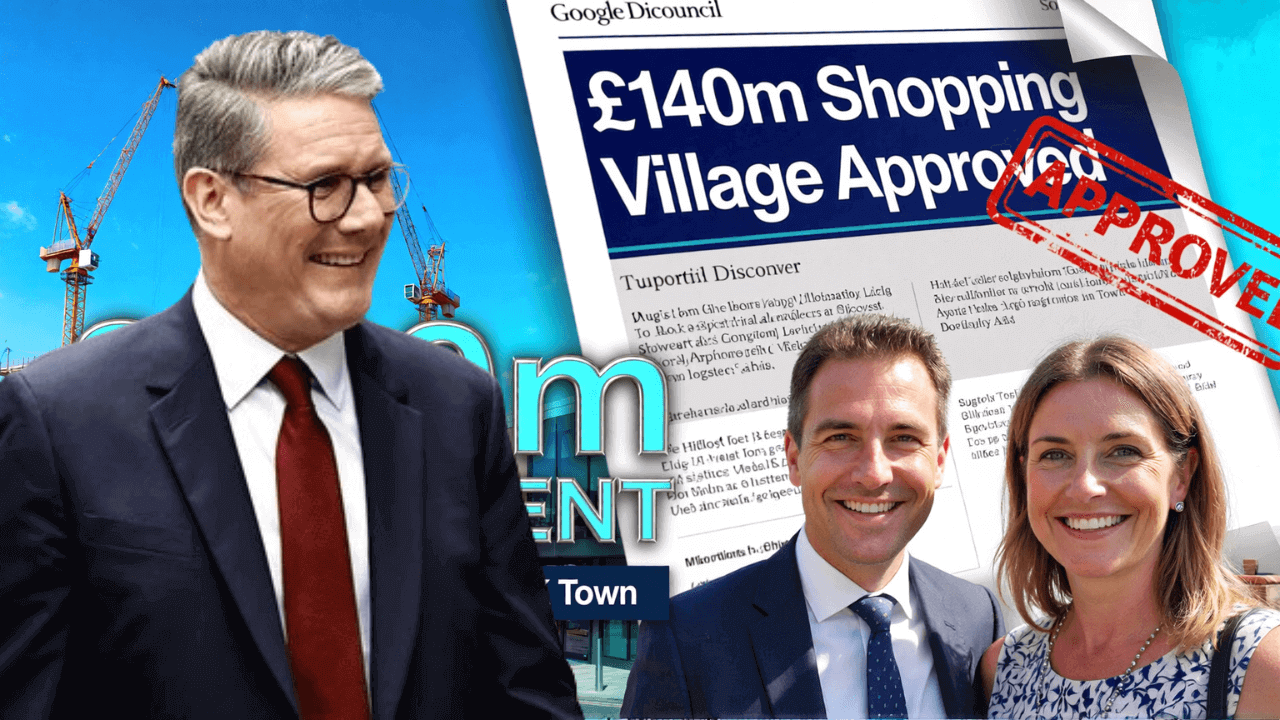
A long‑overlooked UK town is set for a major transformation after plans for a £140 million shopping village were officially approved, marking one of the most significant regeneration decisions in the area for decades. The announcement has been welcomed by residents, local businesses, and council leaders who see the development as a turning point for a community that has struggled to attract large‑scale investment in recent years.
For many towns across the UK, economic decline has left empty high streets, reduced job opportunities, and a sense of being left behind. The approval of a major shopping village sends a strong signal that this particular town is firmly back on the map, with confidence growing that the project could spark wider regeneration and long‑term economic growth.
This article explains what the £140m shopping village approval means, why it is being described as a huge boost for a forgotten town, how it could affect jobs and local businesses, and what residents can expect next.
Why the town has been described as “forgotten”
The town at the centre of the announcement has often been described as forgotten due to years of underinvestment and declining footfall. Like many similar communities, it has faced challenges such as the closure of traditional retailers, reduced transport links, and fewer employment opportunities.
For residents, the lack of major development has contributed to a feeling that the town was being overlooked in favour of larger cities.
What has been officially approved
Planning approval has now been granted for a £140 million shopping village, clearing the way for construction to move forward. The development is expected to include a mix of retail outlets, leisure spaces, dining options, and public areas designed to attract visitors from both the local area and beyond.
The approval represents a key milestone after years of proposals, consultations, and revisions.
Why the £140m investment is significant
An investment of this size is substantial for any town, but it is particularly significant for a place that has not seen major regeneration funding in years. The scale of the project suggests long‑term confidence from developers and planners.
Such investment often acts as a catalyst for further development.
How the shopping village could change the town’s image
The new shopping village is expected to modernise the town’s image and change how it is perceived regionally. Well‑designed retail and leisure spaces can help reposition a town as a destination rather than simply a place people pass through.
This shift in perception can have lasting benefits.
What residents are hoping to see
Many residents have expressed hope that the development will bring new life to the town centre and surrounding areas. Improved amenities, increased visitor numbers, and enhanced public spaces are among the most commonly mentioned expectations.
For some, it represents a long‑awaited sense of progress.
Job creation and employment opportunities
One of the most immediate benefits of the shopping village is expected to be job creation. Employment opportunities are likely to arise during construction, followed by permanent roles once the village opens.
These jobs could appeal to a wide range of skill levels.
Why employment matters locally
Employment opportunities are particularly important in towns where young people often leave in search of work elsewhere. A major development can help retain local talent and provide alternatives to commuting or relocation.
This can strengthen the local economy.
Impact on local businesses
There is often debate about how large retail developments affect existing businesses. Some local traders worry about competition, while others see opportunities to benefit from increased footfall.
Much will depend on how well the development integrates with the wider town.
How footfall could increase across the area
Shopping villages are designed to attract visitors for extended stays rather than quick trips. Increased footfall can spill over into nearby streets, benefiting cafés, independent shops, and services.
This effect has been seen in other regenerated towns.
The role of leisure and dining spaces
Modern shopping villages typically include leisure and dining options alongside retail. These features encourage people to spend more time in the area, making visits more social and experiential.
This approach reflects changing shopping habits.
Why timing matters for retail investment
The approval comes at a time when traditional retail faces challenges from online shopping. Developers increasingly focus on creating destinations rather than purely transactional spaces.
The shopping village model aligns with this trend.
Transport and accessibility considerations
Improved accessibility is often a key part of large developments. Transport links, parking facilities, and pedestrian access can determine how successful a shopping village becomes.
Local authorities will be watching this closely.
Environmental and design considerations
Planning approval typically includes conditions related to sustainability, design quality, and environmental impact. Modern developments are expected to meet higher standards than in the past.
These considerations can shape community acceptance.
Community response to the approval
Initial reaction from the community has been largely positive, with many welcoming the investment after years of stagnation. However, some residents have raised questions about traffic, noise, and long‑term impact.
Public dialogue is likely to continue.
Why regeneration takes time
Even with approval secured, regeneration is not instant. Construction, tenant agreements, and infrastructure work can take years to complete.
Patience is often required before benefits are fully realised.
How councils view developments like this
Local councils often see large developments as tools to stimulate growth, increase business rates, and improve services. Approval usually reflects confidence that benefits outweigh potential downsides.
It is a strategic decision.
What happens next after approval
Following approval, developers typically finalise detailed plans, secure tenants, and prepare construction schedules. Groundwork may begin once remaining conditions are met.
Residents may notice early preparatory work.
Why long‑term planning is important
A shopping village works best when it fits into a wider regeneration strategy. Supporting housing, transport, and public services all play a role in success.
Isolated developments are less effective.
Lessons from other UK towns
Other UK towns that have invested in retail‑led regeneration have seen mixed results. Success often depends on location, design, and community engagement.
These lessons are likely to influence delivery.
How the project could attract further investment
Major developments often signal confidence to other investors. Improved infrastructure and increased visitor numbers can encourage additional projects.
Momentum can build over time.
What this means for younger generations
For younger residents, the shopping village could bring new job prospects and a stronger local economy. It may also improve leisure options and social spaces.
This can make the town more attractive to stay in.
Why not everyone will benefit equally
While many benefits are expected, not everyone will feel them immediately. Some areas or groups may see slower change.
Managing expectations is important.
How success will be measured
Success is usually measured through job creation, business growth, footfall, and community satisfaction. These indicators take time to assess.
Early optimism must be matched by results.
What residents should watch for
Residents should watch for construction timelines, traffic changes, and consultation updates. Staying informed helps communities adapt.
Clear communication is key.
Why this approval matters beyond one town
The approval highlights how targeted investment can revitalise overlooked communities. It reflects a broader effort to spread economic growth beyond major cities.
Other towns will be watching closely.
Key points to remember
A £140m shopping village has been approved, offering a major boost to a town long described as forgotten. The development promises jobs, increased footfall, and renewed confidence, though benefits will take time to materialise.
Careful planning will be essential.
Final thoughts
The approval of a £140 million shopping village represents a defining moment for a UK town that has waited years for meaningful investment. While challenges remain and success is not guaranteed, the decision signals renewed confidence and opportunity.
For residents, the announcement brings cautious optimism. If delivered thoughtfully and integrated into the wider community, the shopping village could help rewrite the town’s story, turning a long‑overlooked place into a destination once again.